HULA
Barter app · In-house product · 2018–2026
HULA is an app for swapping stuff with your neighbors, no money involved, and a project owned by Berraco’s partners. In 2020, its first version earned United Nations recognition as the Most Technically Developed Solution in the Circular Economy Challenge. In 2026 we relaunched it: the app in beta testing, a website in three languages, city pages, and legal pages ready for the App Store, all gearing up for the Zurich launch.
Visit hula.exchange (opens in a new tab)
- Client
- HULA Exchange · in-house product
- Year
- 2018–2026
- Our role
- HULA partners: product, design, and development
- Platform
- iOS app + website in English, Spanish, and German
- Status
- Launch planned in Zurich
- UN
- Most Technically Developed Solution, 2020
- 3
- languages on the website: English, Spanish, and German
- 12
- legal pages, identical to the original
Context
01
Making things last longer.
HULA recreates a barter table on your phone: you put what you no longer use on the table and negotiate, with no money and no middlemen.
Its most ambitious idea is trade routes between several neighbors when there’s no direct match. Today, the app identifies each item from a photo and estimates its value; the trading comes later.
The challenge
02
Two challenges, six years apart.
In 2018: make swapping things easier than buying them. In 2026: a website in three languages for a product that hasn’t launched yet, one that builds interest without promising what the app can’t do yet.
- 01Check an item’s real condition before meeting up.
- 02Upload an item with no dead time.
- 03A trading table that needs no explanation.
- 04Juggle several negotiations at once.
- 05A website that only talks about what the app does today.
- 06App Store legal pages that match the partners’ text to the letter.
How we worked
03
The process, step by step
- 01
Research · 2018
Market research and a study of how early users behaved. We looked at how people categorize and search on Craigslist to build a more intuitive taxonomy.
- 02
Prototypes
The full journey, from sign-up to closed deal, with low-fidelity prototypes in InVision and high-fidelity ones in Framer and Xcode.
- 03
Design system
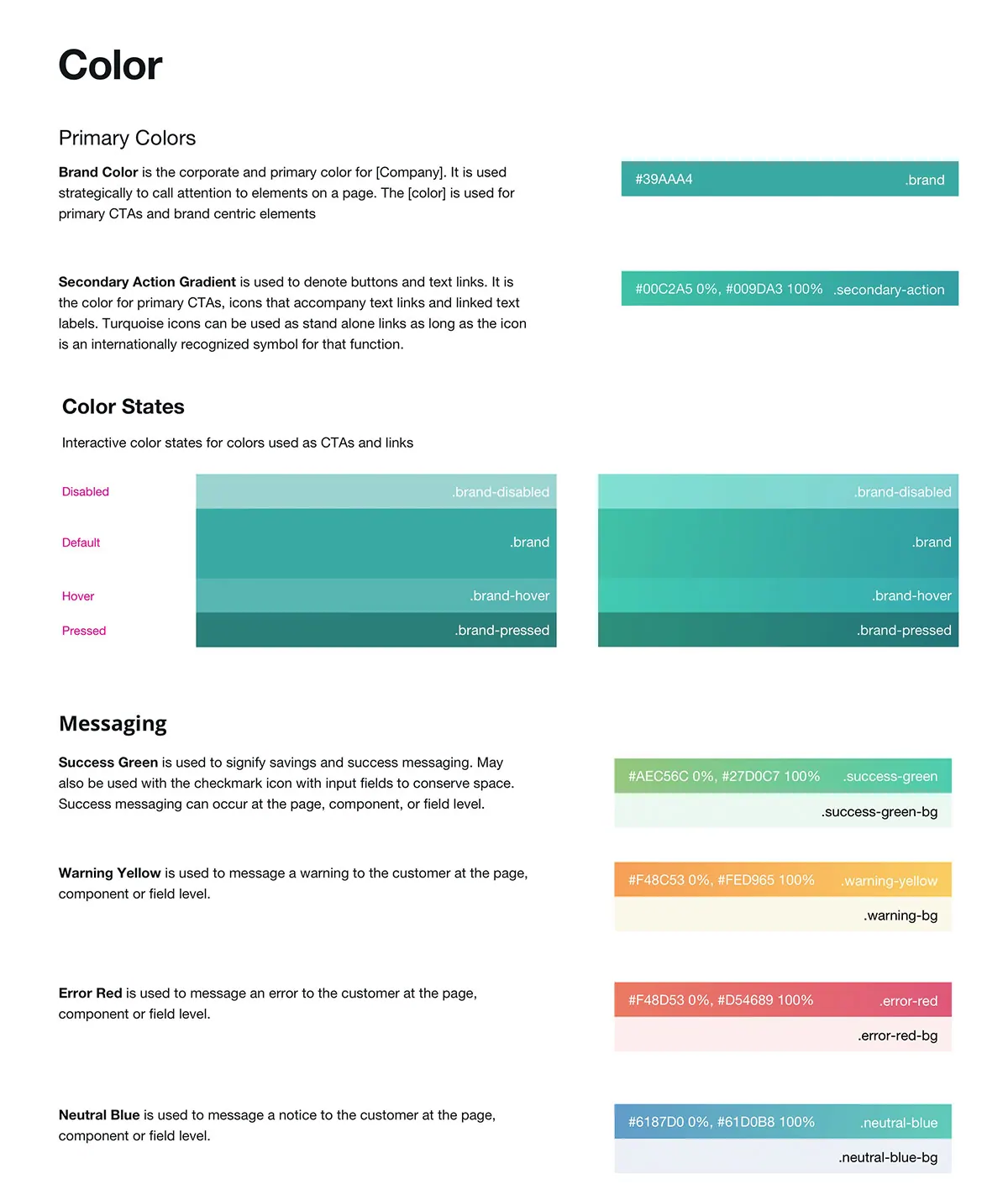
Typography, an accessible palette, and buttons with every state built as nested symbols, so we could iterate fast without losing consistency.
- 04
Global team
Product leadership with teams in the US, Europe, and India, measuring and iterating on every version.
- 05
Relaunch · 2026
Brief and first Astro landing page on the same day; interactive components, city pages with hreflang and schema, and copy rewritten by a HULA partner.
- 06
App in testing
Eight TestFlight builds between July and August: testing, reported bugs, and iteration on how items get valued.
- 07
Legal and go-live
Twelve legal pages in three languages and a homepage consistent with them, published on September 13, 2026.
Problems & fixes
04
Problems we ran into and how we fixed them
Is it really in good shape?
- Problem
- In bartering, nobody trusts the condition of what they’re being offered.
- Fix
- Real-time video of the item, so the other side sees it exactly as it is.
- Result
- More trust, fewer disputes.
Waits that aren’t really waits
- Problem
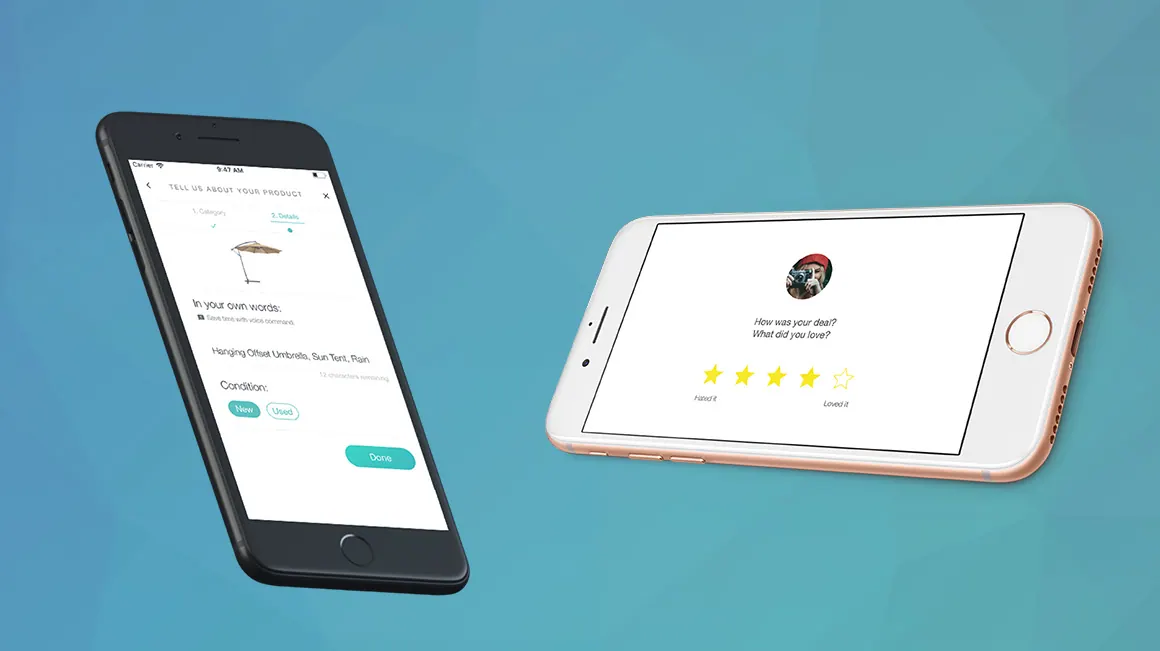
- While a photo uploaded, the screen showed nothing but a spinner.
- Fix
- That dead time now goes to writing the description and picking the category.
A table, not a catalog
- Problem
- Trading one item for another, one for one, almost never works out.
- Fix
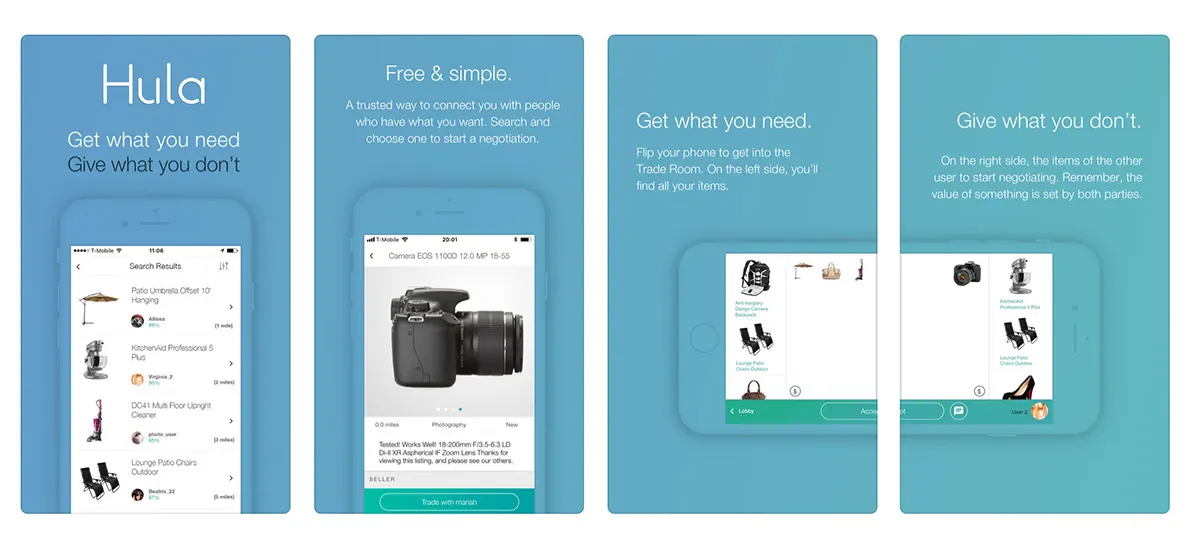
- Each side puts its whole stock on the table and the negotiation starts from there. The trading screen runs in landscape: you tilt your phone to negotiate.
Several negotiations at once
- Problem
- People who trade a lot have several deals open at the same time.
- Fix
- Virtual negotiation rooms, like the tables in poker software.
- Result
- Several trades at once, no mix-ups.
Identical legal pages, in production too
- Problem
- The legal pages had to match the partners’ document word for word. Cloudflare was obfuscating the email addresses in the Impressum, and Astro was turning straight quotes into curly ones.
- Fix
- The legal text is shielded from obfuscation, automatic smart quotes are turned off, and everything is cross-checked against the PDF.
- Result
- English and German match the original word for word, on the live site too.
A website that doesn’t overpromise
- Problem
- The homepage talked about trade routes, live video, and swaps as if they already existed.
- Fix
- Step one covers what the app does today (it identifies the item and estimates its value), and everything else is labeled “Coming soon,” “Próximamente,” or “Bald verfügbar.”
- Result
- A homepage that lines up with the privacy policy.
Mobile that actually works, in three languages
- Problem
- Language links with an 18 px tap area, a sticky element that broke in Safari, heights that jumped around with the browser bar, and German words overflowing their boxes.
- Fix
- 44 px tap areas, 100svh, safe-area on the fixed bar, and automatic hyphenation for German only.
- Result
- Header tap targets went from 18 to 44 px.
What we built
05
Pieces of the project
 01
01The trading table
Negotiating in landscape: your stock across from theirs.
 02
02Every screen
A complete design for every scenario, from browsing items to closing the deal.
 03
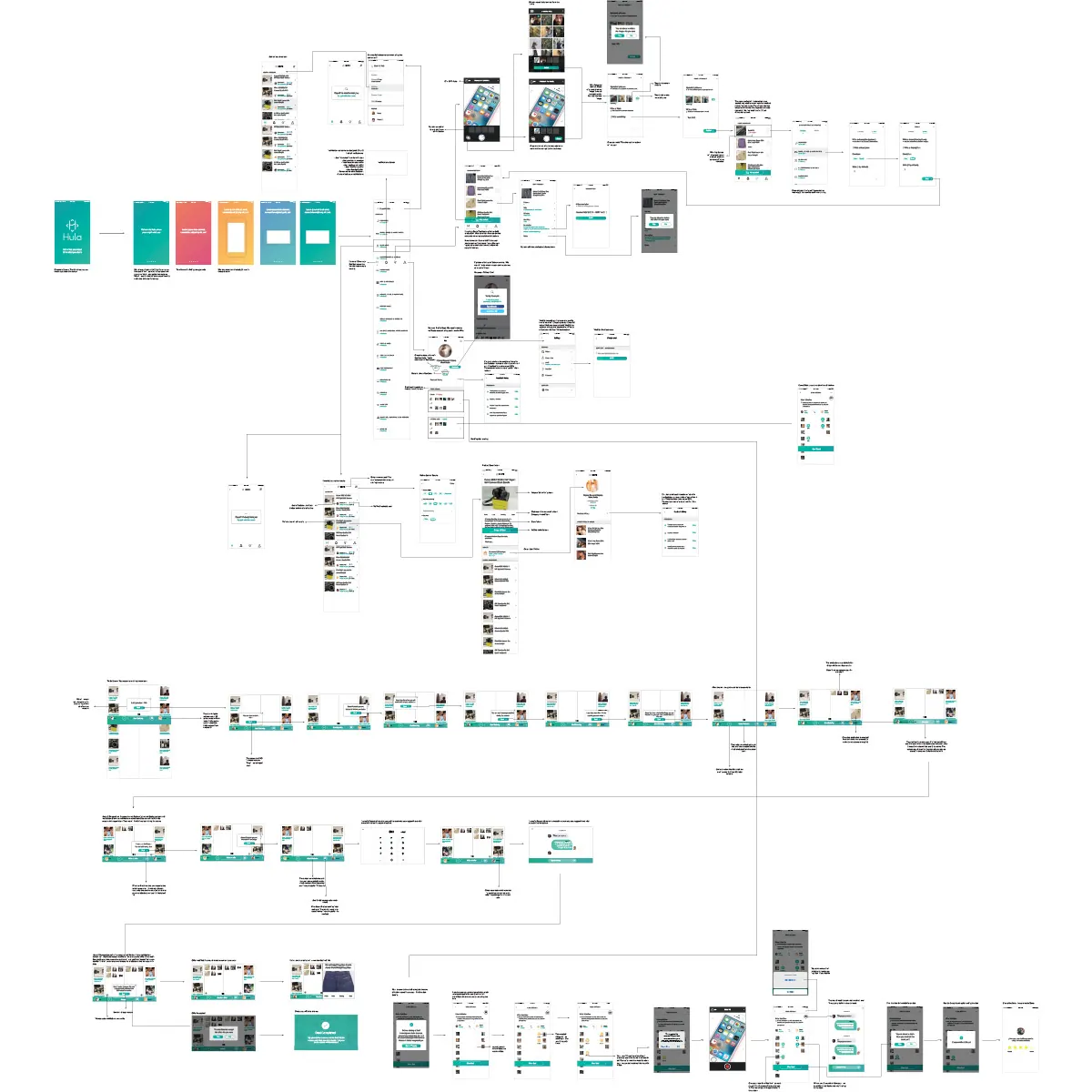
03The journey
From sign-up to a closed trade, with the friction points at every step.
 04
04Design system
A vibrant, accessible palette for a community app.
 05
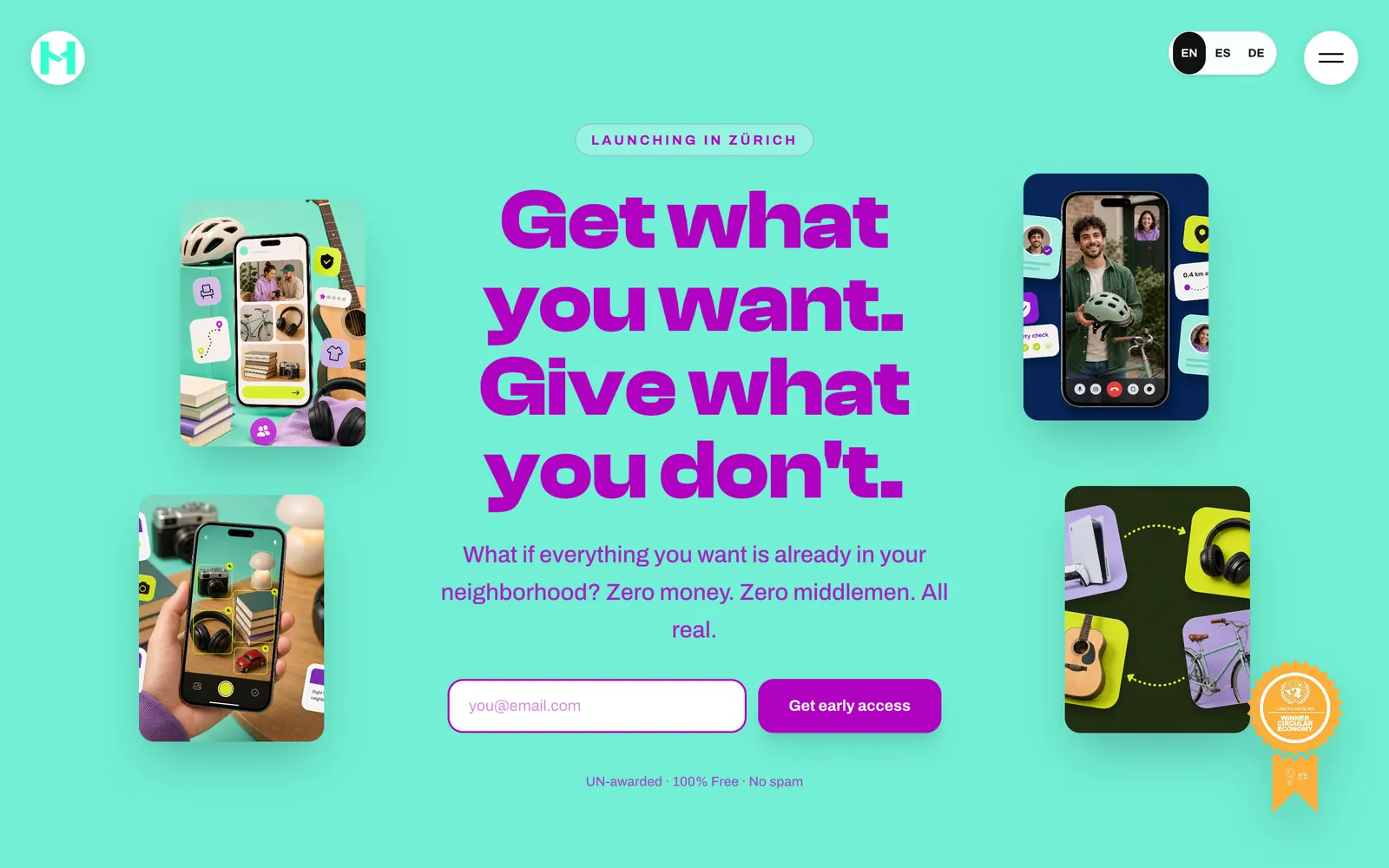
05HULA Exchange
The website, in English, Spanish, and German, ready for the Zurich launch.


Results
06
What we pulled off
UN
Most Technically Developed Solution
UN Unite Ideas, Circular Economy Challenge, April 2020.
3
continents
Product teams in the US, Europe, and India.
CC
open license
Prototype and business model released under Creative Commons so other projects can adapt them.
3
languages on the website
English, Spanish, and German, with per-page hreflang and city pages.
12
legal pages
Privacy, Terms, Support, and Impressum in three languages.
8
TestFlight builds
Between July and August 2026.
Awards
- United Nations · Unite Ideas, Circular Economy Challenge 2020 — Most Technically Developed Solution
Services
Built with